Building a zipline through native forest sounds like a contradiction. Trees, wires, people flying through the canopy — how do you do that without doing damage? At Rotorua Ziplines, that question was not an afterthought. It was the entire design brief.
No Machinery. No Clear-Felling. No Compromise.
When we laid the first wire, we used a drone, a fishing rod, and a hook. Why? Because it meant we could thread the line through the branches without cutting anything. Every anchor point in the ground is just 65mm in diameter but 6 metres deep — a micro footprint that works around root systems rather than through them. Where other zipline builds might walk a straight line and anchor to whatever is convenient, we weaved through the canopy, sometimes with no line of sight at all.
Boardwalks Built Above the Ground
Getting guests from one platform to the next required walkways. But we did not want to compact soil or cut through root zones. So we used ground screws to build elevated boardwalks that sit above the ground entirely. The treads are untreated timber — no chemical leaching into the soil or waterways nearby. Every plant within the corridor was carefully transplanted, not removed.
Boardwalks That Follow the Forest, Not the Other Way Around
During COVID, with the world paused and the team on the ground, we built something we are genuinely proud of: a custom native boardwalk system that guides guests through the forest on the way to the ziplines. It sounds simple. But the design principle behind it is not. The boardwalk does not cut a straight line. It does not remove trees to make room. It weaves — around trunks, between root systems, through the natural contours of the land. Every curve exists because something living was already there, and we built around it. Not a single tree was removed. The forest set the route, and we followed.

Reforestation as Part of the Business Model
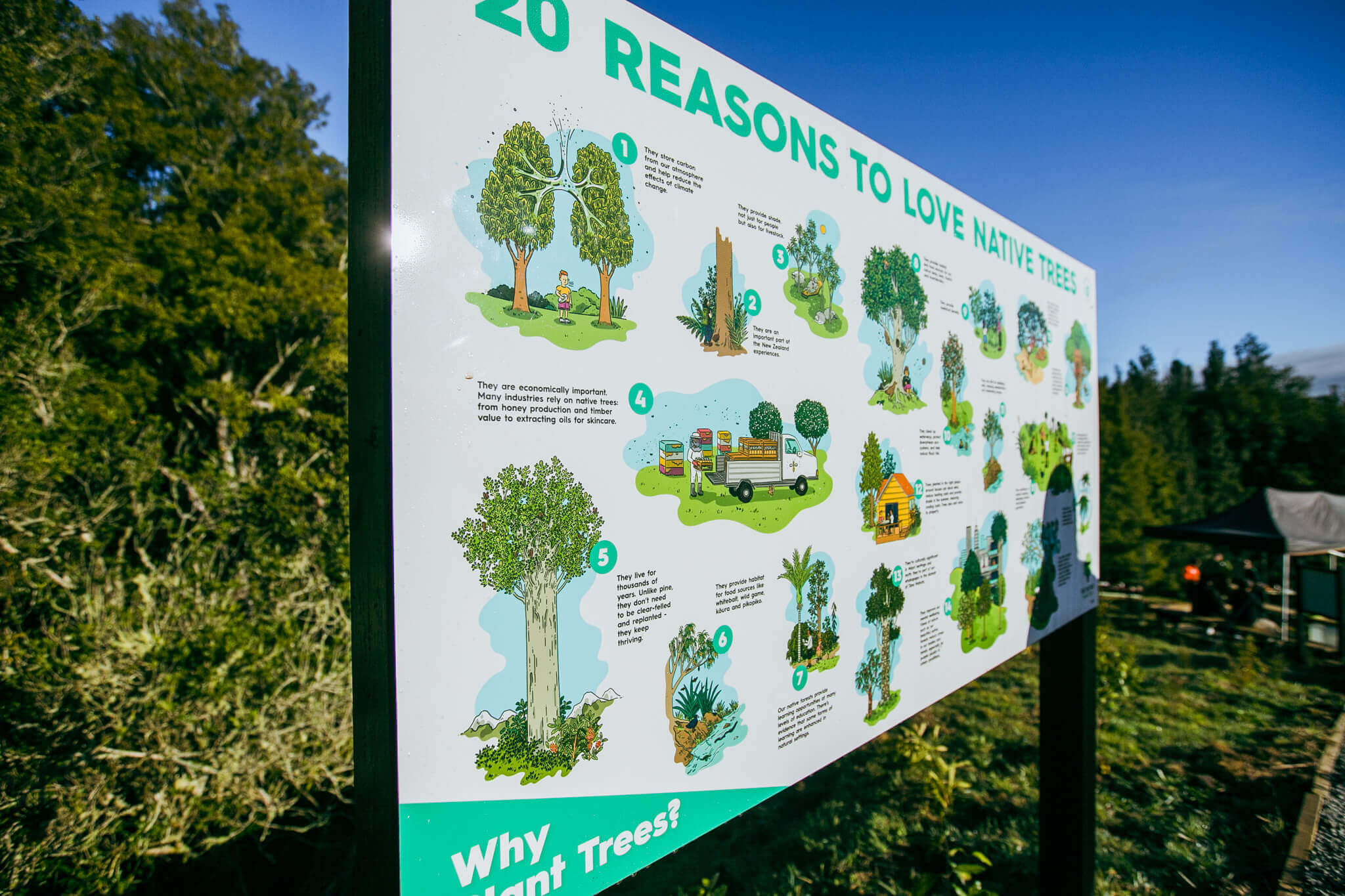
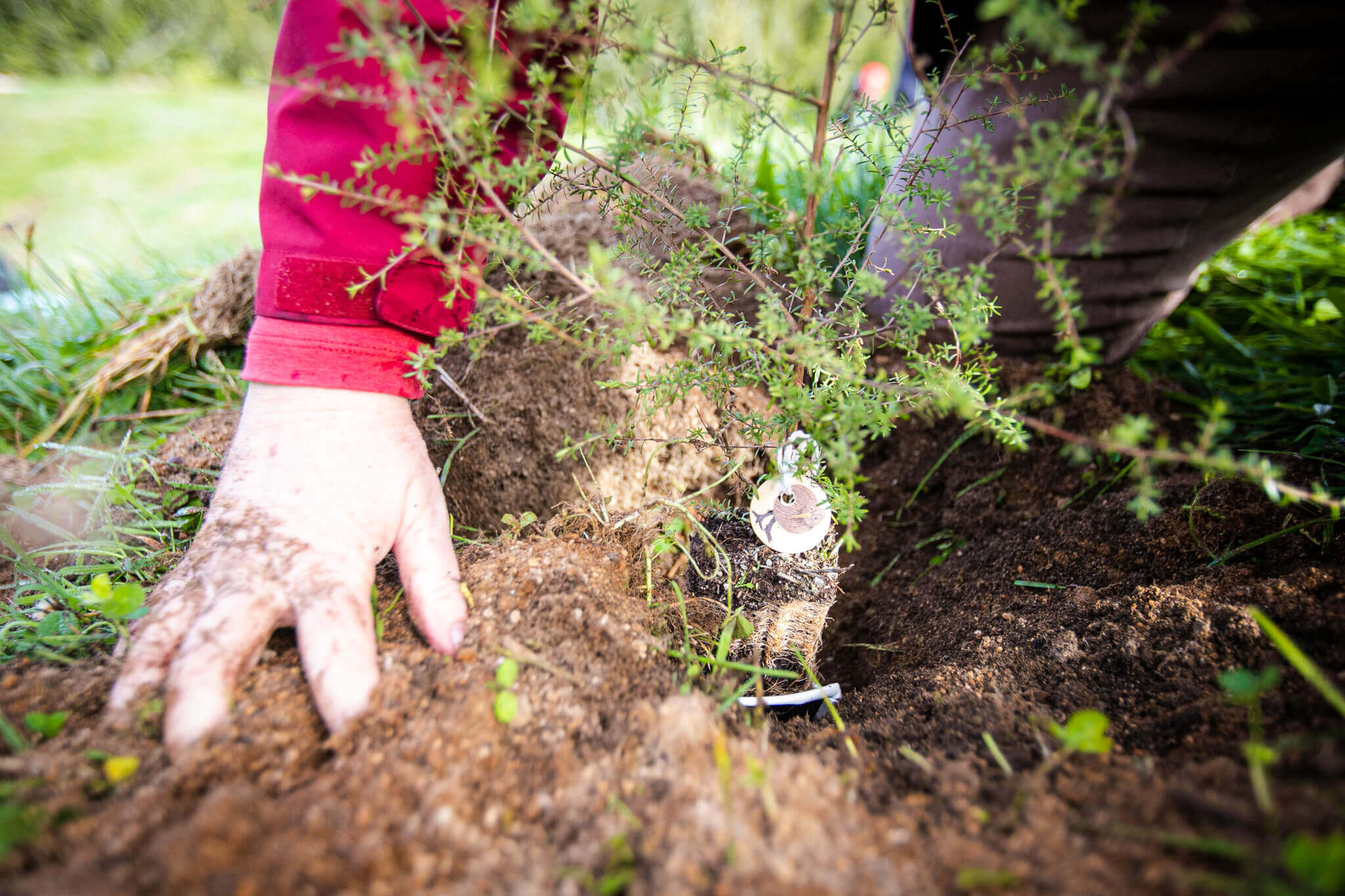
The build itself was only the beginning. Before Rotorua Ziplines arrived, exotic weeds were dominating the landscape and leaching nitrogen into the awa. Gorse and other invasives were cleared, native trees planted, and riparian margins expanded. The goal is to increase the indigenous forest by 6 hectares — an area that would sequester the equivalent of over 26,000 tonnes of CO2, offsetting thousands of households worth of emissions. This is not carbon offsetting on paper. It is physical restoration happening right under the wires.
Conservation Week is the perfect time to experience Ōkere Falls and see this work in action. Book your zipline experience today and explore a forest that is being actively restored — one wire, one planting, one trap check at a time.